
EPISODE 67 with guest celeste warren
Understanding Equity in the Workplace with Celeste Warren
Equity is one of the most misunderstood concepts in today’s workplace. Is equity the same as equality? Does creating equitable opportunities mean giving some people preferential treatment? And how can leaders create fairer workplaces without lowering standards? In this episode of The BOLT Podcast, Todd Bertsch sits down with DEI expert Celeste Warren to bring clarity to these questions and explore what equity looks like in practice.
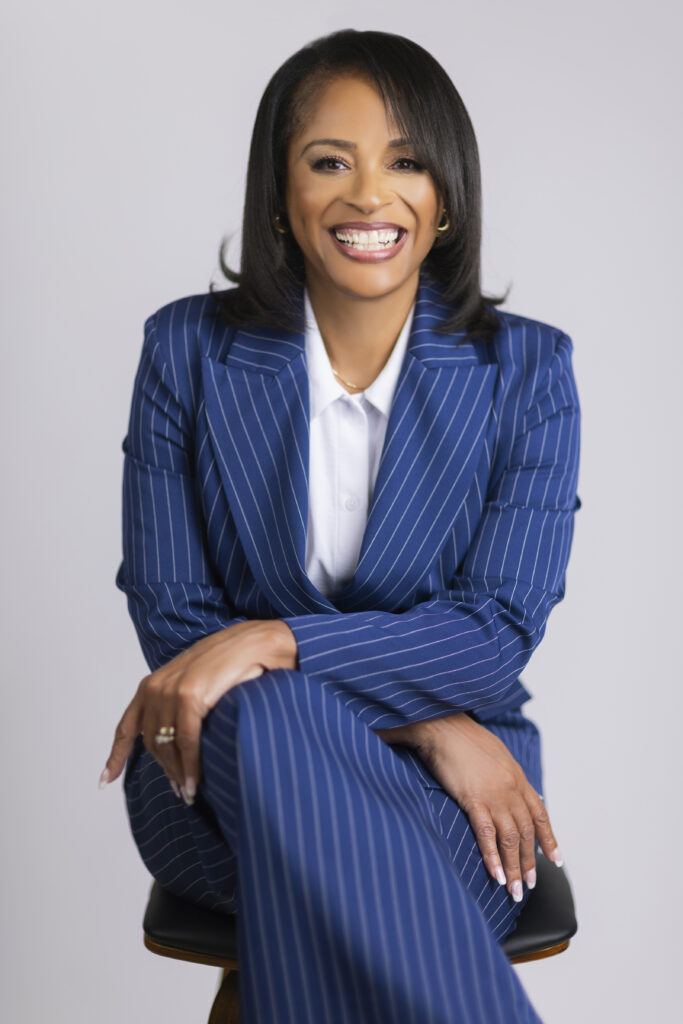
Celeste is a former Vice President and Chief Diversity & Inclusion Officer for a Fortune 100 company, founder of Celeste Warren Consulting, TEDx speaker, and author of The Truth About Equity: What It Really Is, What It Isn’t, and Why Everyone Wins When We Get It Right. Drawing from decades of leadership experience, Celeste explains why people don’t all begin from the same starting point, how unconscious bias can become embedded in workplace decisions and systems, and why leaders need to understand what their people actually need to succeed.
Todd also shares his own experience recognizing blind spots around racial diversity and how curiosity, listening, and getting to know people can help leaders see barriers they may not personally experience. The conversation ultimately moves beyond DEI to a fundamental leadership question: Are we creating an environment where every person has a genuine opportunity to contribute their full potential?
Watch the Full Episode
Watch Todd and Celeste explore equity, equality, unconscious bias, workplace systems, and what leaders can do to create greater opportunity.
Listen to the Podcast Episode
Listen to the full conversation with Celeste Warren on The BOLT Podcast.


What You’ll Learn in This Episode
- Why equity creates access to opportunity rather than preferential treatment.
- Why equity and equality are different—and how they work together.
- Why treating everyone exactly the same does not always create equal opportunity.
- How curiosity can help leaders recognize barriers they don’t personally experience.
- Why equitable hiring does not mean lowering standards.
- How unconscious bias can influence hiring and other people decisions.
- Why changing workplace systems can be more powerful than trying to change people.
- How knowing your employees helps you provide the support they actually need.
- Why equitable leadership can strengthen engagement, retention, innovation, and performance.
- How equity helps organizations unlock more human potential.
Key Quotes from This Episode
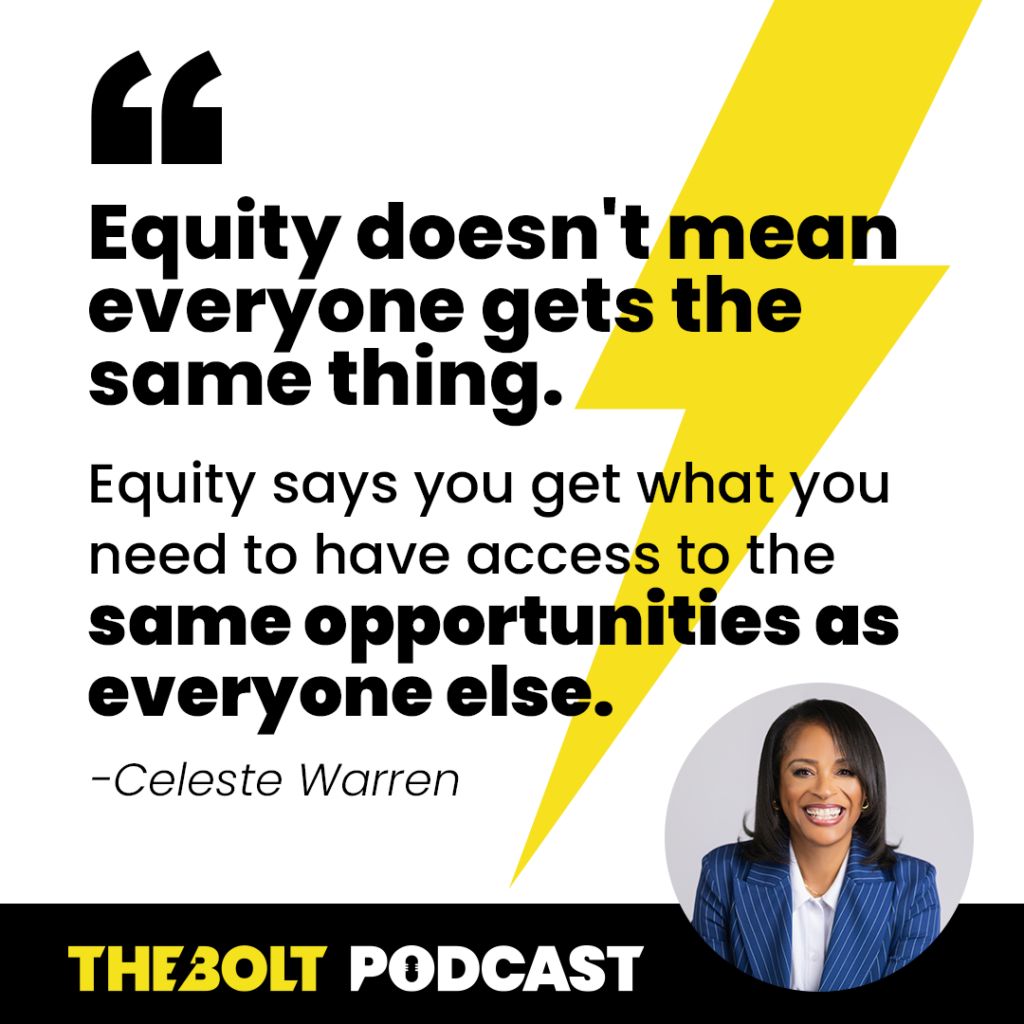
“Equity doesn’t mean everyone gets the same thing. Equity says you get what you need to have access to the same opportunities as everyone else.” — Celeste Warren
“Equity is simply leadership 101, management 101, business 101.” — Celeste Warren
“The systems determine in an organization who makes it through and who doesn’t.” — Celeste Warren
“It creates unfulfilled potential. It creates people quitting in place. It creates turnover.” — Celeste Warren
“Equity is something that’s needed in order for us to get to equality, true equality.” — Celeste Warren
Episode Timestamps
- 03:06 – How early experiences shape our understanding of opportunity
- 16:43 – Why equity is often mistaken for preferential treatment
- 20:42 – How curiosity helps leaders recognize unseen barriers
- 27:18 – Understanding the difference between equity and equality
- 29:42 – Why giving everyone the same resources may not work
- 35:39 – Why equity remains difficult and misunderstood
- 41:09 – How unconscious bias can affect hiring decisions
- 44:18 – Why changing workplace systems matters
- 49:51 – How equitable leadership unlocks human potential
- 55:11 – Moving toward equality and creating hope for the future
Equity vs. Equality in the Workplace
Equity and equality are related, but they aren’t interchangeable. Celeste explains that equality is the goal: a workplace where everyone has access to opportunity. Equity addresses the reality that employees may begin from different places or encounter different barriers along the way. Using the book’s “rocks and fences” analogy, she explains how equitable actions can provide the support people need while organizations do the longer-term work of removing systemic barriers.
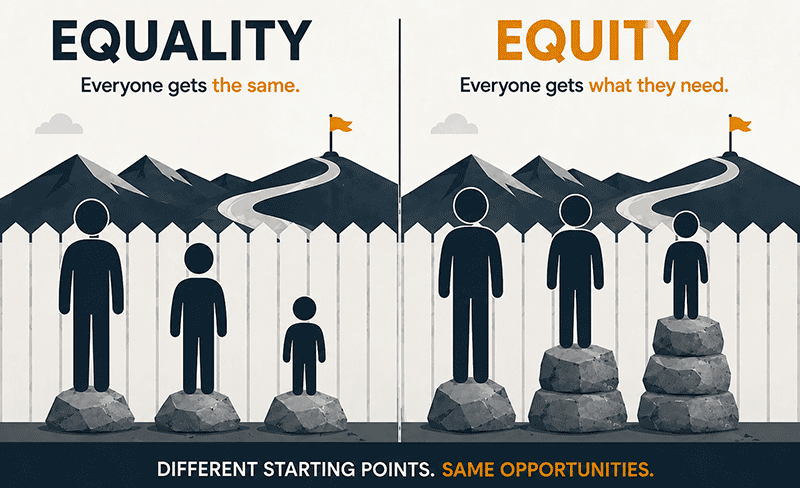
For leaders, this requires moving beyond the assumption that fairness always means giving everyone exactly the same thing. Instead, leaders need to understand their people, identify obstacles, and ask what each employee needs to succeed.
How Equitable Leadership Unlocks Human Potential
Equity isn’t only a DEI initiative. Celeste describes it as fundamental leadership, management, and business practice. Leaders need to understand their employees, listen empathetically, examine how decisions are made, and identify policies or practices that may unintentionally leave people behind.
When leaders fail to do this, Celeste explains that organizations risk unfulfilled potential, disengagement, turnover, and lost innovation. When people feel valued, seen, heard, and supported, they’re better positioned to bring their skills, capabilities, experiences, and ideas to their work.
Resources and Books Mentioned
The following books, tools, and resources were mentioned or referenced throughout this episode.
- Positive Intelligence by Shirzad Chamine
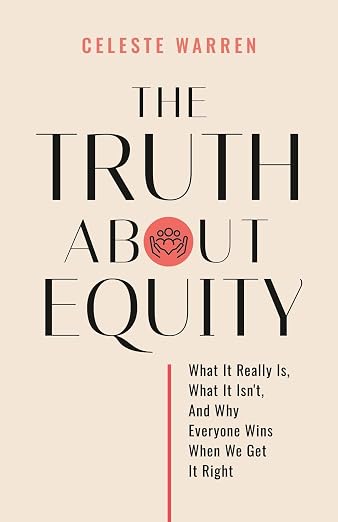
- The Truth About Equity: What It Really Is, What It Isn’t, and Why Everyone Wins When We Get It Right by Celeste Warren
Frequently Asked Questions
What is equity in the workplace?
Workplace equity means recognizing that employees may have different starting points, experiences, and barriers and providing appropriate support so they can access opportunities. As Celeste explains, equity is not about giving everyone the same thing; it’s about understanding what people need to have access to the same opportunities.
What is the difference between equity and equality?
Equality is the goal of creating equal access to opportunity. Equity involves addressing the different barriers or starting points that can prevent people from reaching that goal. Celeste’s “rocks and fences” analogy illustrates why giving everyone identical resources may still leave some people unable to access the same opportunity.
Does workplace equity mean lowering standards?
No. Celeste explains that equitable recruiting still requires candidates to meet the skills, experience, education, and capabilities required for a position. The goal is to expand where organizations look for qualified talent and prevent assumptions or unconscious biases from unnecessarily limiting who receives consideration.
How can leaders create a more equitable workplace?
Start by knowing your people. Ask employees what obstacles are getting in their way, what resources they need, and how you can help. Leaders should also examine hiring, development, promotion, succession planning, and other workplace systems for practices that may unintentionally exclude people. Curiosity and empathetic listening are critical because leaders cannot address barriers they don’t recognize.
About Celeste Warren
Celeste Warren is a visionary leader, TEDx Speaker, author, and former Vice President and Chief Diversity & Inclusion Officer at a global Fortune 100 company, where she spent 28 years driving transformational change. During her decade leading the Global Diversity and Inclusion Center of Excellence, she implemented groundbreaking strategies that helped embed equity and inclusion into business operations and culture.
Today, Celeste is the founder of Celeste Warren Consulting, LLC, where she partners with organizations to build equitable systems that create opportunity and drive sustainable impact. Her TEDx talk highlights the critical importance of changing systems—not just individuals—to create real and lasting momentum in equity.
Celeste is also the co-founder of Destination STEM, Inc., a nonprofit she launched with her two children to support students of color and underserved students pursuing careers in science, technology, engineering, and mathematics.
Celeste is a published author and her articles on diversity, equity and inclusion have been featured in numerous national and global publications and she has had the opportunity to speak at various events across the world. She has recently published her second book entitled “The Truth About Equity”
Explore More Resources
Continue exploring practical tools, conversations, and frameworks designed to help individuals and organizations navigate change, strengthen mindset, and unlock sustainable growth.

Corporate Keynote Speaking
High-impact keynotes that challenge mindsets, spark meaningful conversations, and help leaders and teams navigate change and uncertainty with greater resilience, clarity, and intention.
Mental Fitness Coaching
Interactive coaching programs built around the Positive Intelligence framework to help teams build the mental muscle to handle stress, shift perspective, and respond with intention instead of reaction.